Thursday, April 12, 2007


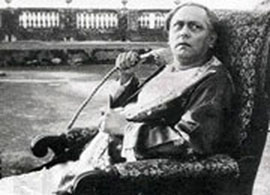
#69 - The Life of Oharu (1952, Kenji Mizoguchi)

The AFI Silver is doing a Mizoguchi session at the moment so I was thankful I got the chance to see this movie, frustratingly not available on R1 DVD. This movie, wow. Set in 17th century Japan but completely timeless, Oharu chronicles the decline and degradation of a young woman, once a courtesan to a mighty lord, now a 50 year old street whore.

Kinuyo Tanaka gives a knockout performance as the title character, saying little but saying so much. I always find it hardest to write about the films on this list that hit me hardest.

new #100: Senso

Monday, April 09, 2007


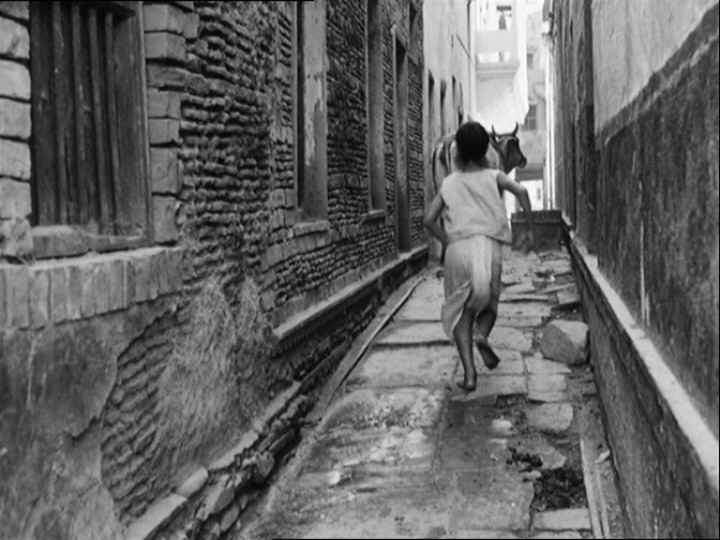
#41 - The World of Apu (1959, Satyajit Ray)

After the domestic box-office failure of 1957's Parash Pather and 1958's Jalsaghar, Satyajit Ray found himself returning to the hero of his first two films to make good on a promise to deliver a trilogy of films based on Bibhutibhushan Bandyopadhyay's Apu character.

The World of Apu picks up where Aparajito left off (the novel Aparajito was split into the two films). Apu, now a young man in Calcutta, has *most* of a college degree and is *kind of* looking for work. Basically, he has become his father, but in a modern, urban environment.

A friend invites him to his cousin's wedding and in a wacky turn of events, Apu finds himself the groom! He now must take responsibility for not only his life, but his young bride's as well. And then, tragedy strikes. Again.

This could very well be my favorite Ray even if the scenario is a bit sitcom-y and later, soap operatic. Subrata Mitra's cinematography continues to evolve and I must confess to relating pretty strongly to Apu in this film. And you've gotta love that ending.

new #100: High and Low

Sunday, April 08, 2007


#10 - On the Waterfront (1954, Elia Kazan)

I can't believe I'd put this one off until now. I guess it's rare when the Academy and the AFI get it right, but this is truly a landmark American picture. Brando is as fantastic as ever, as is the rest of the cast. The realism is of a level rarely seen in studio-era Hollywood. I'm consistently reminded of the second season of The Wire, which shares the same characters and location as well as journalistic research into the subject. Truly moving and accomplished picture.

new #100: Sans Soleil

Thursday, April 05, 2007


#40 - Close-Up (1990, Abbas Kiarostami)

One of the benchmarks of the Iranian New Wave, Kiarostami's most acclaimed feature is an unusual mix of documentary and fiction that seems to exist in no other national cinema. In this film, we are shown the true story of a man who convinced a family he was director Mohsen Makhmalbaf and his subsequent trial. From what I understand, all the actors in the film were the actual people in the case. I haven't seen a lot of Iranian films, just a few others of Kiarostami's, but many use this technique.

I kind of thought the court scenes dragged a bit, also I would have preferred more stylization in the visual images. But the final scenes in which Mr. Sabzian, the imposter, meets the real Mohsen Makhmalbaf was very impressive. Seeing real events happen before our eyes- not documentary really, but completely unscripted. Kiarostami even breaks the fourth wall setting up the scene.

I can't recommend the Facets DVD at all however. They have a much-deserved reputation as the absolute worst DVD company specializing in foreign arthouse cinema and this was one of their worse efforts. The sound is atrocious, in bad need of de-essing (sp?), the colors ugly and the forced subtitles in blocks. It looked like what Borat was parodying. But good film either way. Hope Criterion or someone can get the rights to this.

new #100: To Have and Have Not

Sunday, April 01, 2007

LIST UPDATE


Here's how this project looks as of April 1, 2007. Numbers in parentheses represent the overall ranking on TSPDT's top 1000 master list.

1. Children of Paradise (24)
2. The Gold Rush (37)
3. Intolerance (44)
4. The Wild Bunch (55)
5. La Strada (59)
6. Fanny and Alexander (62)
7. Greed (64)
8. The Earrings of Madame de... (68)
9. Voyage in Italy (75)
10. On the Waterfront (80)
11. Pierrot Le Fou (81)
12. The Leopard (85)
13. Gone with the Wind (88)
14. Sansho the Bailiff (89)
15. Last Year at Marienbad (91)
16. The Decalogue (94)
17. Letter from an Unknown Woman (95)
18. Gertrud (101)
19. The Treasure of the Sierra Madre (102)
20. Earth (110)
21. Napoleon (116)
22. Shoah (117)
23. Ashes and Diamonds (121)
24. Black Narcissus (123)
25. Broken Blossoms (126)
26. Red River (127)
27. Ivan the Terrible (128)
28. The Grapes of Wrath (134)
29. Brief Encounter (137)
30. The Gospel According to St. Matthew (138)
31. The Exterminating Angel (139)
32. The Red Shoes (140)
33. Paisan (141)
34. The Sweet Smell of Success (142)
35. Rome, Open City (143)
36. Jeanne Dielman, 23 Quai de Commerce, 1080 Bruxelles (145)
37. Kind Hearts and Coronets (146)
38. La Notte (153)
39. Two or Three Things I Know About Her (154)
40. Close-Up (157)
41. The Maltese Falcon (158)
42. One Flew Over the Cuckoo's Nest (160)
43. The World of Apu (164)
44. Paths of Glory (166)
45. Once Upon a Time in America (167)
46. The Philadelphia Story (168)
47. Meet Me in St. Louis (170)
48. Monsieur Verdoux (172)
49. The Good, the Bad & the Ugly (173)
50. The Traveling Players (179)
51. The Conversation (180)
52. A Matter of Life and Death (181)
53. The Crowd (185)
54. Vampyr (186)
55. Alexander Nevsky (190)
56. The Wages of Fear (191)
57. The Life & Death of Colonel Blimp (192)
58. The Exorcist (194)
59. A Star is Born (195)
60. Schindler's List (202)
61. Crimes and Misdemeanors (203)
62. Rocco and His Brothers (204)
63. The Crime of Monsieur Lange (205)
64. The Shop Around the Corner (208)
65. The Band Wagon (210)
66. A Day in the Country (216)
67. Written on the Wind (217)
68. Throne of Blood (219)
69. Berlin Alexanderplatz (220)
70. Germany, Year Zero (224)
71. Death in Venice (226)
72. The Life of Oharu (228)
73. Unforgiven (230)
74. The Tree of Wooden Clogs (232)
75. Les Vampires (233)
76. The Navigator (234)
77. The Awful Truth (236)
78. Strike (240)
79. Ninotchka (243)
80. Salo (248)
81. The Passenger (250)
82. Kings of the Road (251)
83. The Time to Live and the Time to Die (254)
84. Floating Clouds (256)
85. The Deer Hunter (257)
86. 1900 (258)
87. Marnie (260)
88. Only Angels Have Wings (262)
89. The Quiet Man (263)
90. Lola Montes (265)
91. The Young Girls of Rochefort (266)
92. Salvatore Giuliano (267)
93. Limelight (269)
94. Great Expectations (274)
95. October (278)
96. A City of Sadness (279)
97. The Great Dictator (280)
98. Tristana (288)
99. The Kid (291)
100. Deliverance (293)


#66 - Wings of Desire (1987, Wim Wenders)

Some of the most amazing camerawork I've ever seen on this film. Somebody put in overtime on the helicopter cam on this one. Sweeping through Berlin in glorious sepia-tone, Wings of Desire is a glorious visual feast.

But oh man, this movie is corny! Now I'm not the type to disparage a film over Christian/spiritual themes - I LOVE all those boring, spiritual crisis films by Bresson, Dreyer, Tarkovsky, Bergman. I think I just kind of draw the line at angels. Sorry, just can't take them seriously. We're moving into QVC collectible-plate territory here. I dunno, I could very easily see myself grow to love this film but for now, nah.

new #100: Deliverance

Saturday, March 31, 2007


#96 - Aparajito (1956, Satyajit Ray)

The second in Ray's Apu trilogy picks up where Pather Panchali left off, with Apu's family picking up and moving from their rural village to the city of Benares along the Ganghes River. Tragedy strikes the Roys again and Apu, now a teenager, gets a scholarship to college in Calcutta, where he gradually grows distant from his mother.

Aparajito is a bit more narratively focused than Pather Panchali, but I liked the debut's wide-eyed wonderment more than the more mature Aparajito, which kind of felt like a lot of coming-of-age films I've already seen (granted, most of which were probably copping Ray's steez). I am excited to see what The World of Apu has in store for me. Tune in next week!

new #100: The Kid

Thursday, March 29, 2007


#24 - Umberto D. (1952, Vittorio de Sica)

After watching Ray's rural South Asian take on neorealism, I thought I'd view one of de Sica's Italian classics. Umberto D. is the story of an old man who has nothing - money, health, family - except his lovable pooch, Flike. We watch Umberto struggle to raise enough money to pay off his debt to his landlady and keep his apartment.

I'm constantly reminded of Akira Kurosawa's Ikiru from the same year. Both directors utilize a symphony of tiny violins to tug at our heartstrings but Kurosawa's hero is trying to achieve something grand, while Umberto is just trying to survive. Ikiru is a movie I admire, but it gets pretty sappy at times. Umberto D. doesn't quite go quite as all out in the melodrama but I dunno, I like melodrama anyway. So, eh, good movie but not great.

new #100: Tristana

Wednesday, March 28, 2007


#3 - Pather Panchali (1955, Satyajit Ray)

Charulata and Jalsaghar whet my appetite for this, the main course in Satyajit Ray's filmography, the Apu trilogy. Pather Panchali is the first, and Ray's first film overall. This may be one of the most accomplished debuts in all of film and certainly one that elevated an entire national cinema.

Ray was inspired by Vittorio de Sica and the other Italian neorealists. One senses that influence in the realistic portrayals of poverty and the use of non-actors, but Ray adds a calm, contemplative pace reminiscent of contemporaneous Japanese cinema, which suits the serene forest atmosphere well.

new #100: The Great Dictator

Wednesday, March 21, 2007


#10 - Sherlock Jr. (1924, Buster Keaton)

Watched this on the Kino double-bill with Our Hospitality, which seemed like a dry run at The General, but Sherlock Jr. blew me away. Best Keaton film I've seen yet and infinitely better than any Chaplin (I rewatched Modern Times last night and it didn't hold up to Buster). Amazing how much humor and imagination can fit into just 45 minutes of screen time.

I'm not sure if this is the first reflexive film-as-dream film ever made, but it seems to anticipate such supreme Mike Ouderkirk favorites as The Wizard of Oz and Mulholland Dr. in structure. Plus the slapstick is just plain funny like when the men try to murder his dream self. Buster keaton was quite the pool player! The obligatory train sequence was an amazing physical performance by Buster or his stunt double. A+++ will watch again and again and again.

new #100: A City of Sadness

Tuesday, March 20, 2007


#51 - The Music Room (1958, Satyajit Ray)

Nobody watches Satyajit Ray movies anymore. Only the Apu trilogy has been released on DVD in America and those are out of print (supposedly really bad quality too... we'll see, I just rented Pather Panchali today). No news about anything on the horizon, nor any touring retrospectives so I guess we're just stuck with VHS for now.

The Music Room I actually saw on a bootleg DVD that my local library stocked for some reason. It was VHS-quality but with badly-synched subtitles that were always at least one line off. Honestly, I'd have been better off watching a VHS with burnt-in subs. Anywho, thankfully it's not a film I needed subtitles to enjoy as much of the appeal is through the performances of Indian classical music and the magnificent cinematography, reminiscent of Kenji Mizoguchi.

The Music Room is about a feudal lord whose land has eroded from a flood and with it left his wealth and prestige. The new generation is taking over, more westernized, but Roy will have none of it. He basks in past glories and then throws the grandest performance his friends have ever seen with the last rupees he has left. A wonderful film that I would love to see in a decent print with decent subtitles. Dammit Criterion, get your ass in gear!

new #100: October

Monday, March 19, 2007


#9 - Rio Bravo (1959, Howard Hawks)

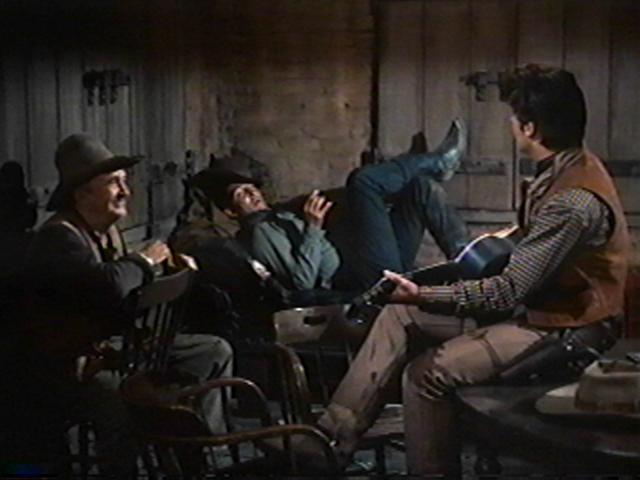
Anyone who follows this blog (which may well be nobody) knows I've been learning to love westerns over the past few months. So yet again, it's another week, another new favorite western. Hawks and Wayne intended this to be a response to High Noon, which they felt was a poor representation of the spirit of a true western sheriff. What could be a reactionary dirge (see: any Duke movie after this), is a fun, character-driven romp. What I love about Rio Bravo is the looseness to the proceedings. There is next to no plot, just a bunch of guys hanging around drinking and smoking and trying not to drink and smoke.

As Sheriff John T. Chance, John Wayne is the straight man amongst a rag-tag gang protecting the town, always responsible and sensible though he can take a joke. Dean Martin is the other lead, a sheriff's deputy struggling with sobriety after a two-year bender. Ricky Nelson is way out of his league as the scrappy young gunslinger taken under Chance's wing. He finally makes himself useful in a totally unnecessary but totally entertaining pair of musical numbers with Martin.

new #100: Aparajito

Wednesday, March 14, 2007


#55 - Performance (1970, Donald Cammell & Nicolas Roeg)

The greatest film to come out of the 1960s counterculture, Performance blew me away like few films ever have. A look into the myriad ways of presenting masculinity and male sexuality, Performance starts out as a blistering gangster film only to morph into an extended mushroom trip after macho Chas hides out in Mick Jagger's house, trying to fit in with the weirdo hipsters it houses.

Jagger plays Turner, a reclusive retired rock star who lives in a delapitated mansion in a menage-a-trois with Anita Pallenberg and a little French runaway. The shots of his house are breathtaking, such a seemingly modest-sized home has an endless supply of rooms and corridors to hide in. Nicolas Roeg films always look amazing and this is the best-looking of them all.

This film has been running through my head all day and unfortunately nothing is coming out onto the ol' blog. But trust me, this is top 10 all-time for me.

new #100: Great Expectations

Friday, March 09, 2007


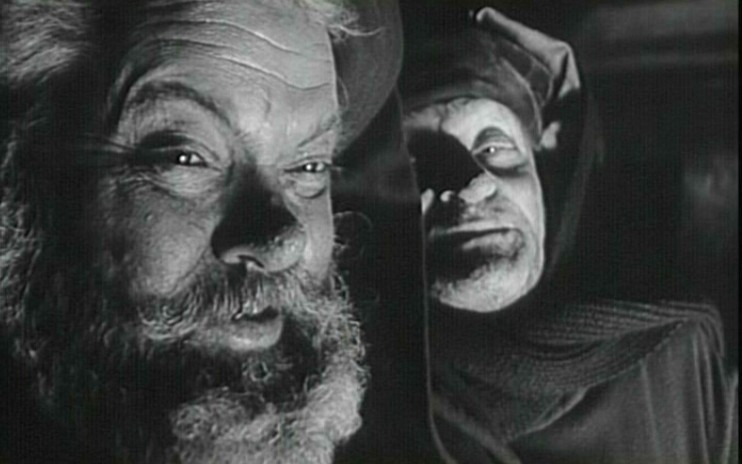
#23 - Chimes at Midnight (1965, Orson Welles


Wow, I really thought this would be one of the very last of the movies on my list that I would ever get a chance to see. Thank you Shakespeare in Washington celebration for bringing this to the AFI Silver with Keith Baxter as special guest.

This film is Welles' adaptation of several Shakespeare plays (Henry IV parts 1 & 2 mainly, with bits of Richard III, Henry V, and The Merry Wives of Windsor) all featuring the character of Sir John Falstaff, the jovial corpulent companion to Prince Hal. It's the role Welles was born to play, or at least one he had grown into by this time. The man is ENORMOUS in this film. Welles relishes the role, commandeering the frame and wringing out every fat joke and sexual double-entendre from Shakespeare's dialogue.

Welles is such an engaging personality, and such a funny guy, it is surprising he never made many film comedies. Four of the five Falstaff plays are tragedies, with him as comic relief. By centering on Falstaff for the main narrative, Welles has created a comedic version of the Prince Hal/Henry V saga but when the film takes a turn for the tragic near the end, it's all the more heartbreaking.

Keith Baxter played Prince Hal in the film and was in person to discuss working with Welles. He was grateful for the role, which he won in an open audition and launched his career as a respected thespian of stage and screen. He lamented that Chimes at Midnight is so hard to see (a Spanish DVD exists and there is an OOP VHS tape in the U.S., though that may be from a public domain source). He said there is a legal battle over the rights and that the sound must be restored before it gets a rerelease (I concur). He's in Beatrice Welles' camp, as he blamed Oja Kodar for holding up the restoration although it was Bea who caused a big stink over Othello and the recent announcement of a 2008 DVD release of The Magnificent Ambersons implied that she was the road block on that project. Anyway, I'm glad to have seen it on the big screen and I hope it gets a R1 DVD release sooner than later because I want to see it again!

new #100: Limelight

Thursday, March 08, 2007


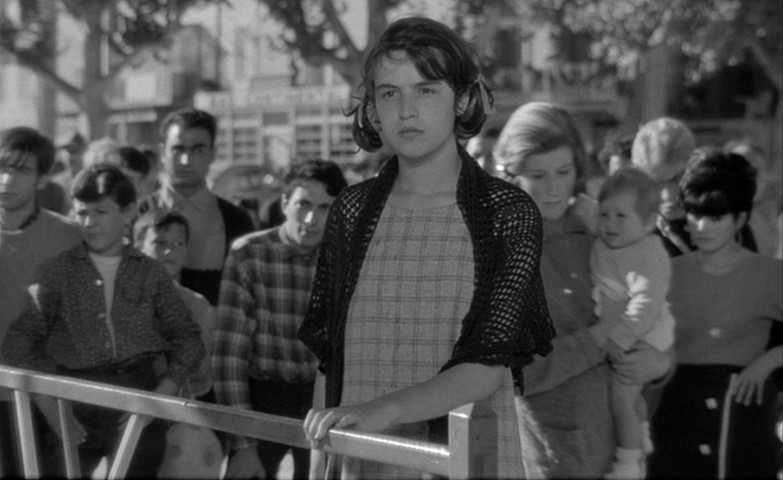
#76 - Mouchette (1967, Robert Bresson)

Poor, poor Mouchette. One of my friends once described this film to me as "tearduct porn" and I can certainly see it. The companion film to Au Hasard Balthazar, Mouchette tells the story of a girl with an incomprehensibly bleak existence. Her alcoholic mother is dying and she must care for her constantly bawling baby brother. Her father beats her in public, her music teacher shoves her face into a piano, her classmates tease her and her clogs are about four sizes too big.

One night, Mouchette attempts to break free of her world and gets caught in a downpour in a forest. While there she comes across two men hunting each other and finds herself as both men's alibi in this attempted murder case.

Like Balthazar, it seems to be set in a part of France that time forgot, with Mouchette's father's ancient automobile appearing before any 1960s cars show up. Balthazar feels like the most Bressonian in its acting, at least of the half-dozen or so films of his I've seen. I'd assumed his models became chronologically more statuesque, but Mouchette isn't quite the blank slate of the previous film's Marie. Well, she is and she isn't. Although tears come down Mouchette's face quite often and we even see her laugh at the carnival, her stoic face feels like a reaction to thousands of nights like the one we just witnessed.

Sound always plays an important role in Bresson's films and Mouchette had a different approach in this area than he had previously employed. Diary of a Country Priest and Pickpocket both utilize first-person narration as well as diaries being written. Mouchette, though having a single tragic protagonist, never explicitly allows her thoughts to be heard. It provides a distance to the character that, rather than isolating us from her, gives the viewer a different approach to her suffering. Furthermore, she rarely speaks and the film has minimal dialogue overall, so one must follow her actions and interpret them as one would.

new #100: Salvatore Giuliano

Saturday, March 03, 2007


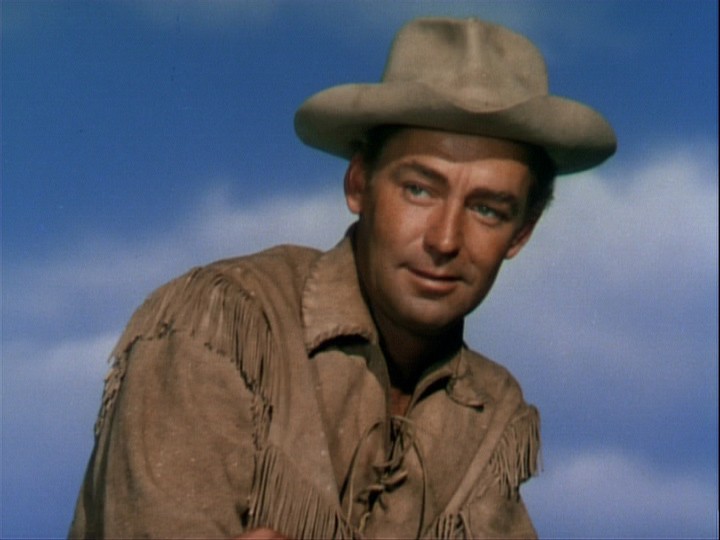
#92 - Shane (1953, George Stevens)

I watched this one in conjunction with an article I read for a class about structuralism in the western film. Shane was used as the example of the "classic classic western," that exemplifies the genre's conventions to a T. For younger audiences, westerns are often the hardest genre to fully absorb aside from the Leone and Peckinpah anti-westerns. It all comes down to how we view westward expansion in a post-'60s politically correct worldview. It's hard to take Indians as villains and lone gunslingers as heroes, at least not without reservations.

As my blog has shown, I've been watching a lot of the classics of the genre, mainly Ford but I've also begun checking out some Anthony Mann pictures lately too. While I consider myself a fan of westerns these days, I still wasn't too pumped about Shane. Every time I've seen clips from it it seems to be a particularly conservative look at the west and hero worship. But upon seeing it for myself, Shane is not only top-notch genre filmmaking, but a wonderful reflection on how we watch westerns. Joey is every member of the audience watching Shane fight Starrett, shoot up the Riker gang and save the town. And then two hours later he is gone forever, just as we get to know him.

new #100: The Young Girls of Rochefort

Tuesday, February 27, 2007


#1 - Singin' in the Rain (1952, Stanley Donen / Gene Kelly)

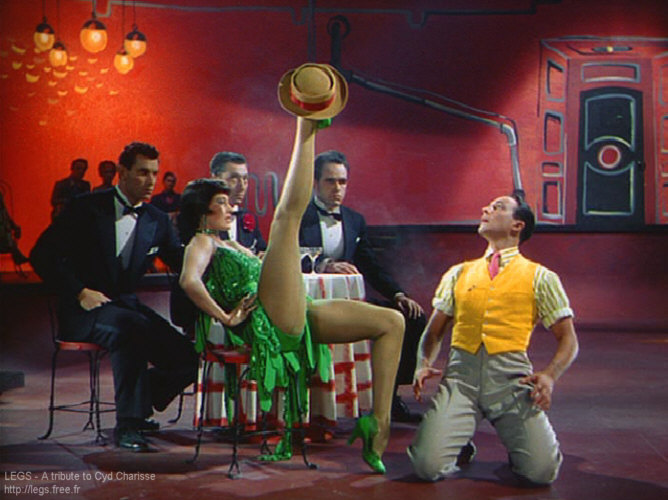
Got #1 out of the way and I sure am glad I did (in the good way!). It's pretty obvious why this is considered the greatest musical of them all. Gene Kelly is, as usual, the corniest dude ever, but a fucking jaw-dropping dancer. Only being familiar with Debbie Reynolds as an old lady, I was surprised how totally adorable she is in this movie. But the star for me is Cyd Charisse, she of the 5 minute non-speaking dancing role in the "Broadway Melody Ballet" number. Look at the picture above. Look at it. Seriously, dude. Dude. OMG. Check for The Band Wagon in the next week or two on this blog- all Cyd all the time (!!!!). I wish Nick Ray's noir musical Party Girl was available (yes, I know I could order it from France but I want it for free!!).

Singin' in the Rain works even better as a comedy than as a musical for me (after all, hardly any of the songs were written for the film). The early sound edit of The Duelling Cavalier had me LOLing like no other. "No, no, no!" "Yes, yes, yes!" I really need to watch more 1920s talkies. Too bad all the really bad ones are off limits for us 21st century types. Hey, The Jazz Singer is coming to DVD finally this year. Tell your mamie, tell your massah.

new #100: Lola Montes

Saturday, February 24, 2007


#90 - Strangers on a Train (1951, Alfred Hitchcock)

Yup, more Hitch. I see myself watching even more in the coming weeks. I think I'm on a kick. So Strangers on a Train, this was a pretty creepy movie. Imagine if Bill O'Reilly were a gay psychopath stalking you and he killed your wife and expects you to commit a murder for him too. Yeah, me neither. It's funny, I'd seen the remake, Throw Momma From the Train, about fifteen years ago and that was the first thing that popped in my head when I started watching the original the other day. Not a big fan of that one, but Billy Crystal is about my least favorite dude in the world.

new #100: The Quiet Man

Wednesday, February 21, 2007


#46 - Out of the Past (1947, Jacques Tourneur)

There was an episode of Home Movies where Brandon wanted to make a backwards movie. He thought it was a novel idea until numerous examples of films with convoluted story structures - Memento being the purely backwards films, Sunset Blvd. starting with the ending and then showing what led to it. Every possibility is brainstormed: beginning-end-middle, end-middle-beginning, middle-beginning-end, end-beginning-middle, you get the picture.

Out of the Past may be the closest to middle-beginning-end structure I've seen, at least in its story. We first find Jeff Bailey as a small-town gas station owner who gets a visit from an old acquaintance. Sensing that his former life as a private eye may be making a comeback, he explains his situation to his gal in a flashback that takes up a full third of the movie. So I guess it's middle-beginning-middle-end actually.

One of the all-time great noirs, Out of the Past marked the first starring roles for Robert Mitchum and Kirk Douglas, two of the biggest names in 50s Hollywood. For some odd reason megababe Jane Greer never became the superstar she deserved to be after this tour-de-force as femme fatale Kathie Moffatt.

new #100: Only Angels Have Wings

Monday, February 19, 2007


#9 - North By Northwest (1959, Alfred Hitchcock)

Okay, so I'm a little embarrassed I've never seen this one. I even mentioned as much in my introductory post. Not only is this a movie that shows up on all these "all-time best-of" lists, but it's a super-popular Hollywood movie from the most famous director ever! Also, everyone but me apparently watched this in high school English class. I must've been sick.

Anyway, there's a reason why this one is such a crowd-pleaser: it's just pretty much the most entertaining movie there is. Sandwiched between Hitch's two most acclaimed films, it's not as abstract and existential as Vertigo, nor is it as twisted a genre exercise as Psycho. North By Northwest is a fun palate-cleanser with a lot of amazing cinematography (few movies have better Technicolor than this), ridiculous plot turns and breezy, brazen flirting between Cary and Eva.

new #100: Marnie (what a coincidence)